Trump and Zelenskyy’s Explosive White House Meeting – Implications for U.S.-Ukraine Relations and Global Stability
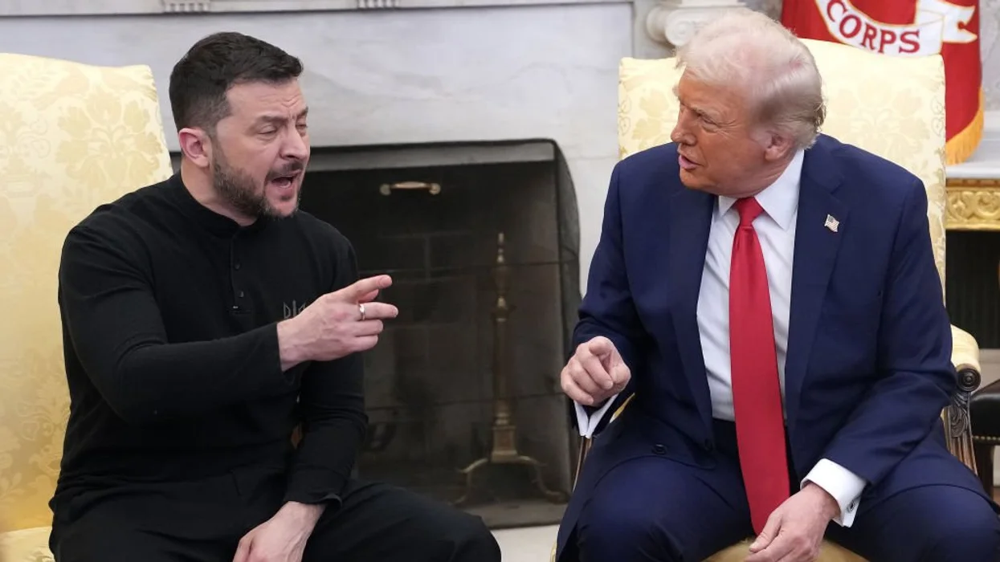
President Donald Trump (right) and Ukraine’s President Volodymyr Zelenskyy meet in the Oval Office on Feb. 28, 2025. What began as a high-stakes discussion on ending the war in Ukraine quickly turned combative, with the two leaders openly clashing over war strategy and expectations. The encounter drew intense scrutiny worldwide – not only for its unprecedented public tension, but for what it signals about the future of the U.S.-Ukraine partnership and the international order. Below, we break down the key topics they discussed, the official statements made, reactions from political leaders at home and abroad, and the potential implications for global stability and the balance of power.
Key Topics Discussed
-
Ukraine War and Peace Terms: The overriding topic was how to end Russia’s invasion of Ukraine, now in its third year. President Trump has long vowed to broker peace “quickly,” and in the weeks leading up to the meeting he launched direct talks with Russia’s Vladimir Putin – even without Ukraine or NATO allies at the table. Trump’s team made clear this would require Kyiv to compromise: his Defense Secretary bluntly stated that Ukraine must abandon its “illusionary” goal of regaining all territory and shelve its NATO ambitions as “unrealistic”. In Brussels, he argued that insisting on restoring Ukraine’s 2014 borders (reclaiming Crimea and all areas seized by Russia) would “only prolong the war and cause more suffering”. Trump instead pushed for an immediate ceasefire and negotiations, signaling a dramatic shift from the prior U.S. stance of supporting Ukraine’s maximal goals. He even agreed to an in-person summit with Putin (proposed to occur in Saudi Arabia) as part of kicking off talks.
-
Security Guarantees vs. Neutrality: A core point of contention was Ukraine’s future security alignment. Trump’s administration indicated that NATO membership for Ukraine was off the table, in line with Moscow’s demands. While promising “robust security guarantees” to prevent a war from reigniting, Trump ruled out any U.S. troop deployment to Ukraine as part of a peacekeeping force. Zelenskyy has consistently maintained that Ukraine needs either NATO membership or equivalent security guarantees to deter future aggression. In the meeting, Zelenskyy likely pressed for assurances that Ukraine would not be left vulnerable if it made concessions for peace. However, Trump’s stance leaned toward neutralizing Ukraine (blocking NATO entry) in exchange for peace – a position welcomed by the Kremlin but worrying to Kyiv and Eastern Europe.
-
U.S. Military Aid and “Burden-Sharing”: Another topic was the scope of ongoing U.S. support. Under former President Biden, the U.S. had provided Ukraine with tens of billions in military aid. Trump, by contrast, has questioned continuing “blank check” aid. Reports indicate Zelenskyy used the meeting to underscore Ukraine’s gratitude for U.S. assistance but also its need for sustained support until Russia’s aggression stops. Trump and Vice President JD Vance countered by emphasizing what the U.S. had already spent and allegedly chiding Zelenskyy for “demanding more”. Trump’s national security advisor, Mike Waltz, later claimed that Zelenskyy “downplayed American contributions” during the talks. This hints that Trump’s side demanded greater appreciation and perhaps that Europe shoulder more of the load. (Notably, Trump had recently floated the idea that European countries deploy their troops to Ukraine as peacekeepers – a suggestion European leaders were cautiously examining.)
-
Territorial Concessions and Peace “Deal”: The leaders also confronted the thorny question of territory. Putin’s Russia currently occupies roughly 20% of Ukraine and is demanding Kyiv cede even more land as part of any peace. President Zelenskyy entered the meeting insisting that no unjust land grab be legitimized – reiterating that Russia is the aggressor and should not be rewarded for invasion. President Trump, however, was openly eager to clinch a deal to “stop the killing,” even if that meant Ukraine making painful compromises. He has implied Ukraine might need to “make a deal” on territory to avoid “gambling with World War III”. In their private discussion, Trump pressed Zelenskyy to consider Russia’s terms, while Zelenskyy argued peace must be just and not simply impose capitulation. This fundamental gap – peace at any cost vs. peace with justice – was at the heart of their confrontation.
-
Economic Cooperation (Critical Minerals Deal): Amid the security disputes, bilateral economic ties emerged as a pivotal topic. Zelenskyy came prepared with a carrot: a proposal for the U.S. to invest in Ukraine’s vast critical minerals sector (such as lithium, rare earths, and other resources key to technology). He had pitched this idea earlier as a way to anchor U.S.-Ukraine relations in long-term cooperation and ensure America has a stake in Ukraine’s post-war success. In fact, a major U.S.-Ukraine minerals agreement was negotiated in advance and was slated to be signed during this visit. Under the deal’s framework, Ukraine would funnel 50% of future revenues from developing its mineral and energy resources into a joint reconstruction fund with the U.S. The idea was to spur investment for rebuilding Ukraine and, indirectly, to serve as a “security shield” – giving the U.S. a vested economic interest in Ukraine’s stability. This topic was initially a point of common ground, aligning Trump’s interest in business opportunities with Ukraine’s need for reconstruction. However, the deal came with contentious terms. Trump’s initial proposal reportedly asked Ukraine to essentially repay $500 billion in aid with mineral rights – a notion Kyiv flatly rejected. A compromise was reached in principle (joint investment fund instead of upfront repayment), but it lacked any direct U.S. security guarantees for Ukraine. In the meeting, Zelenskyy may have tried to firm up U.S. commitments (perhaps tying the economic partnership to assurances of continued aid or defense support), while Trump focused on the business and “deal-making” aspect. Unfortunately, as events unfolded, even this area of potential agreement became a casualty of the day’s discord – by the end of the meeting, Zelenskyy left without signing the minerals agreement due to the breakdown in trust.
-
Other Issues: The talks also touched on Ukraine’s military needs and capabilities. Zelenskyy highlighted Ukraine’s efforts in defending itself – mentioning advancements in drones and other technology where Ukraine is contributing to its own defense. This was part of his argument that Ukraine isn’t simply asking for handouts; it is fighting hard and innovating, but still requires allied support to prevail against a larger aggressor. There were also likely discussions on humanitarian issues and post-war reconstruction plans, given that both leaders publicly speak about wanting to stop the suffering. However, the tone of the meeting overshadowed any detailed collaboration on these fronts.
Official Statements from Trump and Zelenskyy
Both leaders struck vastly different tones in their official remarks around the meeting, reflecting the meeting’s acrimony:
-
President Trump’s Statements: After the talks, Trump did not hide his frustration. In front of the media gathered at the White House, he openly berated Zelenskyy, at one point accusing the Ukrainian president of “disrespecting the United States”. Trump suggested Zelenskyy was ungrateful for U.S. help and too obstinate in his demands. Later that day, speaking to reporters, Trump questioned Zelenskyy’s commitment to peace: “[He] did not look like a man who wanted peace,” Trump remarked, referring to Zelenskyy’s demeanor in the Oval Office. This statement encapsulated Trump’s view that Ukraine was acting as a roadblock to the quick ceasefire he envisioned. Trump also took to social media to reinforce his message – on his Truth Social account, he and his allies claimed that Ukraine’s leadership was not ready to end the war, and hinted that if Zelenskyy didn’t come around, the U.S. might “walk away.” In the meeting itself, Trump bluntly warned, “You either make a deal, or we are out”, effectively issuing an ultimatum that U.S. support was contingent on Ukraine’s cooperation with his peace efforts. These official and semi-official statements from Trump painted a picture of a U.S. president impatient for a deal and highly critical of the Ukrainian side. Trump positioned himself as the one eager for peace and implied that Zelenskyy’s stance – insisting on certain principles – was the main impediment. The White House later put out a brief statement framing the meeting as “frank and direct,” language often used diplomatically to hint at a tough conversation. It said President Trump reiterated the need for a swift end to hostilities and urged Ukraine to be “flexible” to save lives (while omitting the more incendiary barbs that were exchanged).
-
President Zelenskyy’s Statements: In contrast, Zelenskyy maintained a measured and sympathetic tone in his public comments. He did not directly criticize President Trump after the meeting – likely aiming to preserve what goodwill remained. Instead, Zelenskyy’s messaging focused on keeping Ukraine’s plight visible and thanking those who stand by Ukraine. On social media that evening, Zelenskyy wrote, “It is very important for us that Ukraine is heard and that no one forgets about it.”. This gentle statement, coming after the tense encounter, was widely seen as an indirect rebuke to Trump’s suggestion that Ukraine was asking too much. Zelenskyy was essentially reminding the world why Ukraine keeps pleading for support – because its people are fighting and dying to repel an aggressor, and they need the world not to look away. Privately, Ukrainian officials described the meeting as “difficult but honest.” In a closed-door debrief, Zelenskyy reportedly told his aides and supportive U.S. lawmakers that he “made Ukraine’s red lines clear” – that while Ukraine earnestly seeks peace, it cannot accept terms that betray its sovereignty and people. To the press, however, Zelenskyy’s main official statement was positive in phrasing: he thanked President Trump for the opportunity to speak and said he believed “mutual understanding” could still be found. Additionally, speaking to a gathering of the Ukrainian diaspora in Washington later that day, Zelenskyy received a standing ovation. There, he expressed gratitude to “all Americans who support freedom” and reiterated that Ukraine will continue to fight for its independence with or without outside help, although he voiced hope that the U.S. will remain a partner. In sum, Zelenskyy’s public stance was to accentuate gratitude and resilience. He avoided personal attacks, instead emphasizing shared values – freedom, dignity, and the memory of why this war started (Russia’s aggression). This approach aimed to appeal to American public opinion and lawmakers over Trump’s head by highlighting Ukraine’s moral high ground without directly insulting the U.S. administration.
-
Joint Statements or Lack Thereof: Tellingly, there was no joint press conference or communiqué issued after the meeting – a sign of how poorly it went. Originally, some form of joint statement was anticipated, especially if the minerals investment deal was signed. Instead, Zelenskyy’s early departure from the White House scuttled those plans. The White House released only a terse summary noting that the two presidents discussed the conflict and that President Trump “encouraged progress toward peace.” The Ukrainian side’s official readout likewise was sparse, simply saying that “views were exchanged” on how to end the war and that President Zelenskyy emphasized Ukraine’s commitment to a just peace and appreciation for America’s support. Both summaries masked the turmoil that actually occurred, but the lack of any announced agreements or positive joint message spoke volumes.
In short, Trump’s official line was that he is trying to bring peace and that Zelenskyy needs to be more appreciative and agreeable, whereas Zelenskyy’s official line stressed Ukraine’s resolve and gently reminded the world of the stakes of Russian aggression. Each leader stuck to his narrative: Trump casting himself as the dealmaker-peacemaker, Zelenskyy as the principled defender of democracy seeking help. The gulf between those narratives reflects the deeper divide the meeting exposed.
Political and Geopolitical Reactions
The fiery Trump–Zelenskyy encounter prompted strong reactions across the political spectrum in the U.S. and among America’s allies abroad. The incident has been viewed through very different lenses, with some applauding Trump’s tough approach and others alarmed at the public discord between allies.
In the United States, responses split largely along partisan lines:
-
Republican Allies of Trump: Many Republicans praised Trump for his stance, seeing it as a needed course-correction. They echoed the sentiment that the U.S. has been too generous and that Zelenskyy showed insufficient gratitude. Senator Bill Hagerty tweeted, “The United States of America will no longer be taken for granted. The contrast between the last four years and now could not be more clear. Thank you, Mr. President.” Similarly, Rep. Ralph Norman lauded the confrontation, writing, “THIS is strong leadership… Thank you @realDonaldTrump and @JDVance for standing up for our nation.” These lawmakers argue Trump is “putting the American people FIRST” by reining in foreign aid commitments. Pro-Trump commentators also insisted Zelenskyy needed the wake-up call – noting that “too many people are dying to keep demanding more”, as NatSec Advisor Waltz posted on X while defending Trump’s attempt at a peace deal. In their view, Trump was bravely challenging the status quo of endless funding, and pressuring Ukraine to compromise is necessary to end the war.
-
Republican Critics and Hawkish Voices: Not all in the GOP were pleased, however. Traditional national security hawks and some moderates expressed dismay. Senator Lindsey Graham – typically an ally of Trump on many issues but a strong supporter of Ukraine – bluntly called the talks a “complete, utter disaster”. Graham warned that embarrassing a wartime ally could undermine the effort to stop Putin. Congressman Don Bacon (R-Nebraska) likewise emphasized continued support for Ukraine, stating that Ukraine wants to be part of the West while “Russia hates us and our Western values. We should be clear that we stand for freedom.” This reflected concern that the U.S. must not abandon a democracy fighting authoritarian aggression. These Republicans worry that Trump’s approach might reward Putin and harm America’s reputation. Nonetheless, such intra-party criticism was drowned out by the louder applause from Trump’s base, and GOP leadership largely backed the President.
-
Democrats: Democratic leaders reacted with almost uniform condemnation of Trump’s behavior toward Zelenskyy. They characterized the Oval Office clash as a betrayal of democratic values and a gift to Putin. House Minority Leader Hakeem Jeffries released a scathing statement saying, “President Trump and his administration continue to embarrass America on the world stage. Today’s White House meeting with the President of Ukraine was appalling and will only serve to further embolden Vladimir Putin, a brutal dictator.” Jeffries stressed that the U.S. “must not reward Russian aggression” and urged continued support for Ukraine “until victory is won”. Senator Jeanne Shaheen, the top Democrat on the Senate Foreign Relations Committee, said it was “distressing” to see an American president “walking away from our commitment in Ukraine” and not understanding “what a murderous dictator Vladimir Putin is”. Multiple Democrats used words like shameful, dishonor, and abdication to describe Trump’s conduct. Senator Jack Reed lamented that “today’s spectacle in the Oval Office was a political ambush and a shameful failure of American leadership”, noting that mocking an ally fighting for its life only benefits Putin. Rep. Gregory Meeks, ranking member of House Foreign Affairs, said the world watched the “supposed leader of the free world throw a temper tantrum… lashing out at a wartime president,” which did nothing to advance peace. In sum, Democrats saw Trump’s treatment of Zelenskyy as undermining U.S. interests and core values – a moment that erodes America’s moral leadership. Some also pointed out the irony that Trump was impeached in 2019 for pressuring Zelenskyy, and now, once again, he was publicly pressuring the same leader – this time to capitulate to Russia. Several Democratic lawmakers vowed to use Congress’s power of the purse to ensure Ukraine still gets aid, effectively signaling a potential check on Trump’s policies.
Among U.S. institutions and the public, there were other notable reactions. The State Department spokesperson, when pressed on the clash, diplomatically replied that in the end “the people of Ukraine will decide” their fate and hinted Zelenskyy “has a chance to turn this around…for the sake of his people” – a careful way to neither fully endorse nor reject Trump’s stance. Meanwhile, financial markets reacted to the uncertainty (more on that in the next section), showing that even investors were keeping an eye on the diplomatic drama. American public opinion appeared divided: conservative media lauded Trump for “tough love” toward Zelenskyy, whereas mainstream and liberal outlets ran headlines about the “shouting match” and questioned if the U.S. was abandoning a friend. This domestic split underscores that the Ukraine issue – once a relatively bipartisan cause – has become politicized heading into the 2025 political season.
Among U.S. Allies internationally, the reaction was swift and largely supportive of Zelenskyy, highlighting widening rifts between Washington and its traditional friends:
- European Leaders Rallying Around Ukraine: Within hours of the meeting, leaders across Europe took to social media and public forums to express solidarity with Zelenskyy. While careful not to overtly criticize President Trump by name, their messages implicitly countered his narrative. French President Emmanuel Macron (who had met with Trump just days before) tweeted a pointed reminder: “There is an aggressor: Russia. There is a people who are under attack: Ukraine.” He lauded the Ukrainians “who, since the beginning, have been fighting… for their dignity, their independence, for… the security of Europe.” This was a clear rebuke to any equivalence between Russian aggression and Ukraine’s defense. Germany’s Chancellor Olaf Scholz flatly stated, “Nobody wants peace more than the Ukrainians do” – pushing back on the notion that Zelenskyy doesn’t want peace. A chorus of other European heads of government – from Poland’s Donald Tusk telling Ukraine “You are not alone”, to the Baltic states, Netherlands, Scandinavia, Spain, Italy, and more – all voiced support for Zelenskyy’s leadership and Ukraine’s cause. The presidents of the European Commission and Council jointly praised Zelenskyy’s “dignity” and told him “Be strong… You are never alone. We will continue working with you for a just and lasting peace.” Such statements underscored that Europe stands firmly with Ukraine and believes justice – not just speed – must guide peace efforts.
French President Emmanuel Macron:
-
Calls for Unity and Warnings: Several allied leaders also stressed the importance of Western unity, implicitly critiquing the U.S.-Ukraine rift. Italian Prime Minister Giorgia Meloni, who has ties to Trump but supports Ukraine, carefully suggested convening a summit of the U.S., European nations, and other allies to discuss the path forward on Ukraine. In her statement, Meloni warned, “Every division of the West makes us all weaker and favours those who would like to see the decline of our civilisation.” This was a thinly veiled admonishment aimed at healing the breach before it widens further. Likewise, leaders in Britain, Canada, and others not quoted here reportedly engaged in quiet diplomacy to reassure Zelenskyy of continued support and to urge the U.S. not to abandon Ukraine. The overall European response highlighted a major transatlantic rift: after years of a united front against Putin’s war, Trump’s return to a more skeptical stance has Europe scrambling to maintain a common strategy.
-
A New Sense of European Resolve: Importantly, some European figures took Trump’s stance as a wake-up call for Europe to step up even more. Kaja Kallas, the former Estonian PM now serving as the EU’s foreign policy chief, bluntly asserted that after this episode “it became clear that the free world needs a new leader. It’s up to us, Europeans, to take this challenge.” She pledged that Europe “will step up our support to Ukraine” to ensure Ukraine can continue to resist aggression. This sentiment – that Europe may have to lead if the U.S. falters – was echoed in various European editorial pages. It marks a potential inflection in how Europe sees its role in global security, essentially preparing to take more initiative rather than depending wholly on U.S. leadership.
-
Russia and Others: While the question focuses on allies, it’s worth noting that Russia’s reaction was one of thinly disguised satisfaction. Russian officials publicly refrained from extensive comment (perhaps to avoid derailing Trump’s pressure on Ukraine), but state media portrayed the clash as proof of disarray among Ukraine’s supporters. They emphasized Trump’s line that Zelenskyy was “not ready for peace,” using it to bolster Russia’s claim that Kyiv (not Moscow) is prolonging the war. In Moscow’s view, Trump’s tough talk vindicated some of their grievances, and they welcomed signs of U.S. fatigue. Meanwhile, China – another key global player – watched closely. Chinese media noted the U.S.-European split and suggested that U.S. support for allies is “wavering,” which Beijing could interpret as an opening in its own strategic competitions. Other countries, from Israel to India, generally stayed neutral in public but are undoubtedly recalculating what U.S. foreign policy under Trump means for global stability.
-
Outlier Support for Trump: The one notable outlier in Europe was Hungarian Prime Minister Viktor Orbán, a known Trump ally and frequent critic of Zelenskyy. Orbán openly sided with Trump, praising the American president’s approach. He wrote on X (Twitter), “Strong men make peace, weak men make war. Today President @realDonaldTrump stood bravely for peace… Thank you, Mr. President!”. This starkly contrasted with all other NATO/EU leaders. Orbán’s view aligns with a faction of populist politicians in Europe who are skeptical of aiding Ukraine. However, his stance was isolated at the continental level – if anything, it only highlighted how unified the rest of Europe was in backing Zelenskyy.
In summary, geopolitical reaction coalesced around support for Ukraine and concern over U.S. reliability. Allies are alarmed that the U.S. and Ukraine are openly at odds, and they’re signaling that if the U.S. retreats, Europe will not abandon Ukraine. This unprecedented episode – an American president dressing down a Ukrainian president on the White House stage – has sent shockwaves through allied capitals. It has, in effect, rallied European support even more strongly behind Zelenskyy, while raising serious questions about transatlantic unity moving forward.
Implications for U.S.-Ukraine Relations and Global Stability
The fallout from the February 28 meeting stands to significantly influence both the bilateral relationship between Washington and Kyiv and broader global stability going forward. Several key implications are already becoming apparent:
-
Strained U.S.-Ukraine Relations: The once-warm relationship between Washington and Kyiv has hit its most turbulent moment since Russia’s full-scale invasion began. Trust and rapport were clearly damaged. The fact that no deal was signed – notably the much-touted minerals agreement – and that Zelenskyy left Washington empty-handed is a stark indicator of the strain. Going forward, Ukraine may fear that U.S. support is conditional or could be abruptly withdrawn. Trump’s ultimatum during the meeting (“make peace or lose U.S. backing”) will linger in Kyiv’s calculations. Ukrainian officials will likely look for ways to secure guarantees from Congress or other U.S. stakeholders to hedge against Trump’s unpredictable approach. For example, Kyiv might intensify outreach to U.S. lawmakers of both parties to lock in future aid packages. On the U.S. side, the administration might now view Zelenskyy as unexpectedly resistant. Trump could personally take offense at how the meeting went and become even more transactional in dealing with Ukraine. The camaraderie seen when Zelenskyy visited Washington under Biden (with cheering bipartisan welcomes) has given way to a more business-like and even adversarial tenor under Trump. In practical terms, military aid that Ukraine was counting on may face new delays or conditions. Already, there are reports that the next tranche of U.S. weapons is “under review” after the meeting’s collapse. The relationship, while not broken, will require careful mending. Both sides have incentive to maintain ties – Ukraine desperately needs support, and the U.S. still has strategic interest in not seeing Russia win outright – but it will take diplomacy to overcome the personal fallout between the presidents.
-
Ukraine Looking to Europe (and Others): One immediate implication is Ukraine diversifying its support network. Sensing U.S. hesitancy, Zelenskyy is likely to lean much more on European allies for military aid, financial assistance, and security guarantees. We already saw a preview of this: in response to Trump’s earlier moves, Europeans increased their military aid commitments in late February, and talks accelerated about a European peacekeeping role. Now, Europe may double down – potentially delivering more advanced weaponry that the U.S. might hold back, and considering some form of European-led security mission or guarantees. The U.K. and France’s leaders, after meeting Trump, discussed deploying up to 30,000 European troops to help enforce any eventual peace deal. Those discussions will likely intensify, as Europe tries to fill gaps left by U.S. reluctance. Beyond Europe, Ukraine could also reach out to other partners: for instance, Canada, Japan, and Australia (all strong Ukraine supporters) might be asked to play bigger roles in aid or reconstruction. Even countries like Turkey, which has mediated between Ukraine and Russia before, could become more crucial interlocutors if U.S. mediation is viewed as biased toward Moscow. Ukraine will not want to put all its eggs in the American basket now – Zelenskyy will seek a broader coalition of support so that Ukraine’s fate is not beholden to the whims of one leader.
-
Conditionality of U.S. Support: For the United States, the approach to Ukraine seems to be shifting from a values-driven solidarity to a more conditional, interest-based footing. Trump tying U.S. support to Ukraine’s willingness to negotiate (and to economic deals) sets a new precedent. We can expect that future U.S. aid will come with strings attached. For example, the administration might disburse aid in tranches contingent on “progress in peace talks” or push Ukraine to agree to certain parameters (like a ceasefire line). This is a marked change from the blank-check support of 2022–2024. It also implies that if fighting escalates or Ukraine launches offensives that Trump thinks are counterproductive, he could freeze or slow aid – effectively using aid as leverage to steer Ukraine’s strategy. Such conditionality puts Ukraine in a bind: it must either comply with U.S. preferences or risk losing vital aid, a dynamic that could cause resentment and make Ukraine feel its sovereignty is being compromised in another way. Over time, this might weaken the alliance’s effectiveness, since Ukraine might hold back militarily out of fear of upsetting Washington, and the U.S. might be seen as an unreliable patron if it withholds help when Ukraine needs it most.
-
Global Balance of Power – U.S. Leadership Eroding?: The events of this meeting could herald a shift in the global balance of power, particularly concerning U.S. leadership of the Western alliance. Since World War II, the U.S. has been the principal architect of the international order, upholding democratic allies and deterring aggressors. If the U.S. now steps back from that role in Ukraine, it sends a signal worldwide that American engagement is no longer guaranteed. Allies in Europe and Asia may perceive that they must fend for themselves more. The rift between the U.S. and Europe over Ukraine policy is exactly the kind of division Russia has sought to exploit. Should this divide deepen, it could tilt the balance of power in favor of authoritarian powers like Russia and China, who prefer a weaker, disunited West. Already European officials are warning that Washington “is not to be trusted” as before, and that adversaries “will take note” of America’s wavering commitment. If European nations respond by becoming more unified and militarily assertive on their own (as hinted by leaders like Kallas and Macron), we could see a more multipolar power structure within the Western alliance – with the EU taking on responsibilities traditionally shouldered by Washington. This might eventually balance out, but in the interim, there’s a risk of a power vacuum or miscoordination. In the worst case, Russia could capitalize: a less resolute U.S. stance might embolden Putin to escalate fighting or make new demands, believing the West will force Ukraine to concede. That could prolong the war or even expand it if miscalculations occur.
-
Global Stability and Precedent: How the U.S.-Ukraine dynamic plays out will have consequences for global stability and “humanity’s future trajectory.” One concern is the precedent set by forcing Ukraine into a disadvantaged peace. If Russia is seen as getting away with seizing territory through force, it undermines a fundamental principle of international law – that borders shouldn’t be changed by aggression. This could encourage other aggressive moves around the world. Democratic nations worry that appeasing Putin now will only invite more aggression later, whether from Russia or copycats. On the other hand, if the war drags on with waning U.S. support, Ukraine could face a dire situation on the battlefield, potentially leading to greater instability (a stalemate or Russian advances, and a humanitarian catastrophe). Nuclear risks also remain: a cornered Russia or a desperate escalation could lead to the unthinkable. Trump’s comment about “World War III” reflects a genuine concern – that the longer the war continues, the greater the risk of broader conflict. Thus, the challenge is balancing the urgency of ending the war with the necessity of a fair outcome. The meeting’s fallout complicates this balance. A rushed peace might be unstable (if Ukraine cannot accept it or Russia doesn’t honor it), whereas a fracturing alliance might make the war bloodier and longer.
-
Economic and Market Impacts: A more immediate stability aspect is economic. The uncertainty introduced by U.S.-Ukraine tensions has rattled financial markets. Investors “priced in” more risk after seeing the public spat, as evidenced by a flight to safe-haven assets when news of the showdown broke. Safe U.S. Treasury yields fell and European stock futures dipped on fears that hopes for a near-term peace deal might be dashed. If the conflict lingers or widens, it will keep energy and commodity markets volatile, affecting global inflation and growth. Conversely, any progress toward resolution (even a ceasefire) could boost economic optimism. Businesses are also watching the U.S.-Ukraine relationship because it affects sanctions, defense spending, and reconstruction contracts. The minerals deal, for instance, could have opened opportunities for American companies in Ukraine; its delay means potential economic benefits are also deferred. Overall, geopolitical stability and economic stability are intertwined – the meeting’s negative outcome, by clouding the peace outlook, also clouds the global economic outlook.
In essence, U.S.-Ukraine relations have entered a new, more fraught phase, and the ripples extend far beyond those two countries. There is a real risk of a leadership vacuum in the democratic world if the U.S. retreats and Europe struggles to fill the gap. Such a shift could redefine alliances and embolden authoritarian regimes, affecting everything from European security to the Indo-Pacific balance of power. However, it’s also possible that this jolt leads to new adaptations: Europe strengthening its defense unity, Ukraine becoming more self-reliant and innovative, and the U.S. public reevaluating the importance of supporting democracies abroad. The coming months will be critical in determining which path these implications take – toward a more unstable world of fractured alliances, or toward a recalibrated but ultimately resilient coalition upholding global stability.
Expert Analyses and Predictions
Foreign policy experts and analysts have been parsing the meeting and its aftermath to forecast what it means for the war in Ukraine and the world. Their insights reveal deep concern, but also outline potential paths forward:
-
Attempts to Leverage Economic Incentives: John E. Herbst, a former U.S. ambassador to Ukraine, noted prior to the visit that Zelenskyy’s move to include a critical minerals partnership in his peace proposal was a shrewd way to “remind” Washington that Ukraine can be a cooperative partner. This came after Trump’s early Ukraine policy had “turned the Western world upside down” by sidelining allies and even calling Zelenskyy a “dictator” in frustration. The quick negotiations on the minerals deal – from an initial U.S. proposal to a signed agreement in just two weeks – seemed to validate Zelenskyy’s strategy of appealing to Trump’s deal-making instincts. Experts at the Atlantic Council observed that this deal gave Trump a tangible reason to want a stable outcome in Ukraine (access to resources) and might “ensure that the peace he brokers…is durable.” However, the breakdown of the meeting and the non-signing of the agreement raise doubts about this optimistic scenario. Analysts now suggest that economic incentives alone may not overcome fundamental differences on political issues. The Center for Strategic and International Studies (CSIS) released an analysis cautioning that the minerals agreement, while innovative, “includes little to guarantee Ukraine’s security or reaffirm U.S. support in the ongoing conflict.” In other words, tying U.S. interest to Ukraine’s resources might not be enough – without firm security commitments, Ukraine is still exposed. CSIS also pointed out that any benefits from mining would be long-term; it takes on average 18 years to develop a new mine and bring minerals to market. Thus, experts doubt that an economic pact alone will “move the needle” in the near term for either Ukraine’s security or America’s mineral supply. The prediction here is that unless coupled with immediate security guarantees, such deals won’t fundamentally alter the war’s trajectory.
-
Duration and Outcome of the War: Many analysts fear the Oval Office clash could prolong the war rather than shorten it. The public spat suggests a lack of alignment between Ukraine and its most powerful backer, which could slow decision-making and embolden Russia. One portfolio manager, observing market reactions, said it looked like progress toward a ceasefire might now be “on hold”, forcing investors to “price in a little bit more uncertainty.” This reflects a broader expert sentiment: the path to peace just became murkier. If Trump maintains a hard line of pressuring Ukraine, Zelenskyy may actually dig in – knowing that too much compromise could lose him domestic support or even leave Ukraine defenseless. On the flip side, if Trump withholds support, Ukraine’s ability to fight effectively could diminish over time, potentially leading to a stalemate or Russian advances. Some experts, especially those of a realist bent, believe Trump’s tough approach could eventually coerce a deal – essentially betting that Ukraine, under pressure, will agree to a ceasefire that freezes the conflict. They argue this might be the quickest way to halt the bloodshed, even if it’s not ideal. Indeed, figures like Hungary’s Orbán and some American commentators applaud this strategy as “brave” peace-making. However, the majority of Western security analysts are skeptical that a forced deal would hold. They point to Putin’s history of breaking agreements and the Russian demand for Ukrainian capitulation. If Ukraine is forced into concessions without ironclad security guarantees, it could simply give Russia time to regroup and attack again in the future. Thus, the more prevalent expert prediction is that the war will continue into 2025 with no easy resolution – unless there’s a significant change in Putin’s stance or a dramatic increase in outside pressure on Russia.
-
Future of U.S. Foreign Policy: Strategists in think tanks are also using this episode as a bellwether for U.S. foreign policy in the coming years. The dramatic departure from Biden’s approach to Trump’s approach within a month of the presidency changing hands has been noted as causing whiplash for allies. Some analysts warn that if U.S. policy can swing so sharply, allies will hedge their bets. “Adversaries and allies alike will take note” of U.S. inconsistency, Senator Reed said pointedly – a sentiment analysts echo. The prediction here is that we may see a more divided West, where countries like France and Germany try to lead independent initiatives (such as Macron’s idea of European strategic autonomy). In practical terms, this could mean Europe enhancing its defense cooperation outside of NATO frameworks and perhaps even pursuing dialogues with Russia on its own to ensure security, given uncertainty about U.S. reliability. Conversely, some experts argue that if Trump’s gambit somehow yields a peace deal (even an imperfect one), it could validate a more isolationist U.S. stance – with voters seeing that America can disengage and the sky doesn’t fall. That could accelerate a U.S. pullback from other global commitments. This debate is ongoing among foreign policy thinkers: does the Trump-Zelenskyy clash signify the beginning of a U.S. retreat from global leadership (and thus a more multipolar, unstable world), or is it a temporary aberration that Europe and others will compensate for?
-
Humanity’s Future Trajectory – Democracy vs. Authoritarianism: A number of commentators place this meeting in the larger context of the global contest between democratic and authoritarian systems. The Fulcrum, a nonpartisan civic news platform, published a piece lamenting that “what we witnessed in the White House was the antithesis of constructive and respectful dialogue” and that long-standing principles of U.S. foreign policy (supporting democracy, respecting allies, maintaining alliances) are “crumbling before our eyes”. David Nevins, the author, argued that if the U.S. abandons allies like Ukraine, it undermines the very idea of the free world’s unity, potentially encouraging the “destroyers” of the international order. In this view, the outcome of Trump vs. Zelenskyy matters not just for Ukraine, but for the moral leadership of the world. Experts in democracy studies worry that a Ukraine forced into submission would be a victory for tyranny and a blow to the post-1945 rule-of-law-based system. On the other hand, there are realpolitik thinkers who say the international order is already shifting – with or without Ukraine – toward more regional spheres of influence. They predict that the outcome of this episode might be the formalization of a new Yalta-like arrangement, where great powers (U.S., China, Russia) tacitly agree to “spheres of influence.” Ukraine might unfortunately fall into Russia’s sphere in such a scenario, despite the will of the Ukrainian people. While this is speculative, it shows the stakes perceived by some: nothing less than the direction of the 21st century’s geopolitics. Will it be defined by a strengthened coalition of democracies standing firm (as symbolized by Zelenskyy’s defiance), or by a resurgence of might-makes-right power politics (as some see in Trump’s deal-making)?
-
Optimistic Scenarios: Not all analysis is pessimistic. A few experts outline ways this crisis could lead to positive change. For instance, if Europe does increase its defense commitments and unity, the Western alliance could emerge more balanced and resilient, with less over-reliance on U.S. politics. In Ukraine, the jolt from the meeting might spur even greater self-sufficiency – accelerating domestic arms production (Ukraine has been ramping up drone and missile programs) and anti-corruption reforms to reassure all donors. It’s also possible that behind the scenes, cooler heads in Washington and Kyiv will find a modus vivendi: perhaps a private understanding where Ukraine agrees to attend ceasefire talks (appeasing Trump) but the U.S. quietly assures it will not fully cut off aid and will protect core Ukrainian interests. Such nuanced outcomes aren’t visible in headlines but can develop over time. Some seasoned diplomats suggest that after the public fireworks, practical negotiations will continue quietly – for example, via envoys like Trump’s Secretary of State or backchannel communications – to patch up differences. They note that even during the shouting match, neither Trump nor Zelenskyy stormed out or severed dialogue completely; they disagreed fiercely but didn’t slam the door shut. This leaves room for diplomacy to work in subsequent weeks.
In forecasting humanity’s future trajectory, it’s clear that the Trump-Zelenskyy meeting has become a symbolic inflection point. Will it be remembered as the moment the West started to fracture, or as the catalyst for democracies to rally together in new ways? The balance of power could tip based on what follows. If Putin perceives weakness and exploitation opportunities, we may see a darker period of aggression and instability – a sort of “might makes right” era. Alternatively, if the free world adapts – with Europe taking more leadership and the U.S. perhaps tempering Trump’s hard line through internal checks – then support for Ukraine could continue and successfully repel Russia, reinforcing the post-WWII norm against conquest.
Experts will be watching several indicators in the coming months to gauge this trajectory: the level of U.S. aid that actually reaches Ukraine (does it continue or drop off?), the progress of any peace talks (and whether Ukraine’s interests are protected), and the unity among allies (does the U.S.-Europe rift heal or widen?). Each of these will tell us whether the outcome of that contentious day at the White House steers the world toward a more stable and principled future or toward greater fragmentation and uncertainty.
Assessment: The February 28, 2025 Trump-Zelenskyy meeting may well be a turning point. In the immediate term, it has injected uncertainty into the Ukraine war effort and exposed fault lines between the U.S. and its allies. In the longer term, how this situation resolves will influence the credibility of American leadership and the cohesion of the democratic world. A reconciliation and renewed commitment to Ukrainian victory would strengthen the norms that have (largely) kept peace in Europe for 75 years. Conversely, a collapse in support or a forced peace on Russia’s terms could signal a more chaotic international era – one where aggressors feel emboldened and alliances mean less. The balance of power is teetering: between an international system based on cooperative security and one drifting back to great-power dominance. Humanity’s future trajectory – towards a world of greater peace and democracy, or one of rising autocracy and conflict – could be nudged in one direction by the outcome of this high-profile clash. As of now, the meeting has left more questions than answers, but it has undoubtedly spurred leaders worldwide to grapple with those questions urgently. The coming responses – by Washington, Kyiv, European capitals, and Moscow – will determine whether this episode becomes a mere diplomatic footnote or the first act of a new global reality.
Sources:
- Reuters – Summary of Trump’s Feb 12, 2025 calls and peace talk initiatives (Trump says Putin and Zelenskiy want peace; phone calls kick off talks to end Ukraine war | Reuters)
- Reuters – Coverage of the Feb 28 Oval Office clash and aftermath (Investors unnerved by heated Trump-Zelensky Oval Office showdown | Reuters) (European leaders show support for Zelenskiy after Trump clash | Reuters)
- Reuters – U.S. political reactions (Congress members’ statements) (Lawmakers in US Congress react to Zelenskiy-Trump Oval Office clash | Reuters)
- Reuters – European leaders’ reactions and statements of support for Zelenskyy (European leaders show support for Zelenskiy after Trump clash | Reuters)
- The Atlantic Council – Analysis of the lead-up to the meeting and context of Trump’s Ukraine policy shift (Dispatch from Kyiv: The Trump-Zelenskyy meeting signals a momentum shift in Ukraine’s favor - Atlantic Council)
- CSIS – Analysis of the U.S.-Ukraine critical minerals deal and its implications (Breaking Down the U.S.-Ukraine Minerals Deal)
- The Fulcrum – Opinion piece criticizing Trump’s behavior during Zelenskyy’s visit (This is not how a global leader behaves - The Fulcrum)