Introduction
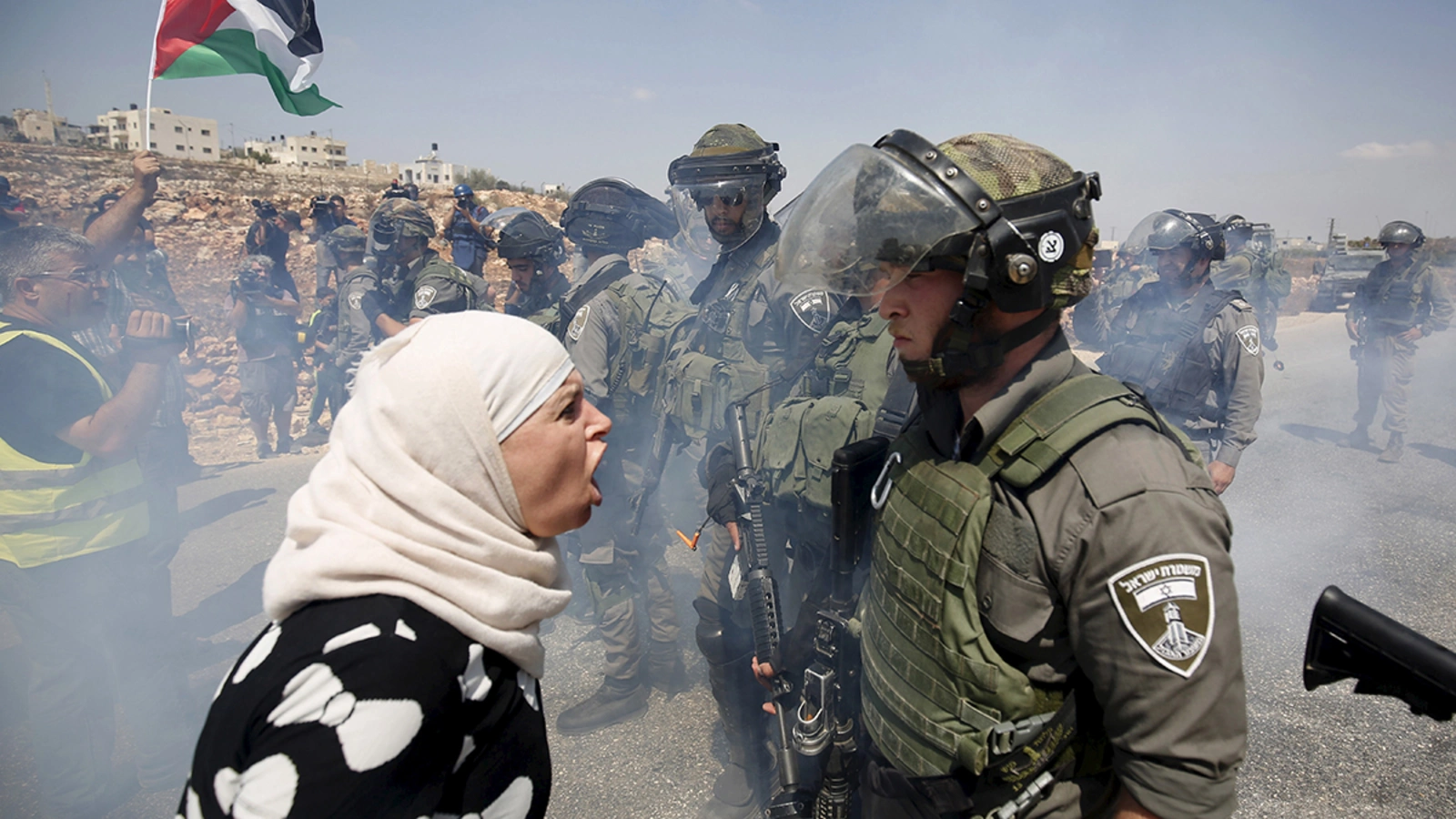
The Israel–Palestine conflict is one of the world’s longest-running and most complex struggles, marked by deep historical roots and immense human suffering. Over the past century, the conflict has claimed tens of thousands of lives and displaced millions. Both Israelis and Palestinians see themselves as fighting for existential rights – security and survival for Israelis, and land, freedom, and dignity for Palestinians. This analysis outlines the historical context “from recorded history to today,” examines who might be considered right or wrong, and discusses who acts as defender or aggressor from each perspective. It also evaluates the humanitarian and moral dimensions of the conflict, guided by Christian ethics as taught by Jesus (emphasizing love, justice, and peacemaking). Finally, it suggests how the conflict might be resolved in a just and compassionate manner.
Historical Overview of the Conflict
Origins (19th–Early 20th Century)
Modern Zionism (Jewish nationalism) arose in the late 1800s, seeking a Jewish homeland in historic Palestine. At that time, Palestine was part of the Ottoman Empire and was overwhelmingly inhabited by Arabic-speaking Muslim and Christian Palestinians, with a small Jewish minority. After World War I, the Ottoman Empire collapsed and Britain took control of Palestine under a League of Nations mandate. In 1917, Britain issued the Balfour Declaration, promising to support “the establishment in Palestine of a national home for the Jewish people.” During the British Mandate (1923–1948), Jewish immigration (including many refugees from Nazi Europe) increased, and tensions grew. Palestinian Arabs resented the loss of land and feared being made a minority in their own country, leading to protests and a major Arab Revolt (1936–1939), which was brutally suppressed by the British.
UN Partition Plan (1947)
After World War II and the Holocaust, international support grew for a Jewish state. In 1947 the United Nations proposed to partition Palestine into two states, one Jewish and one Arab. Jewish leaders accepted the plan, but Palestinian Arab leaders (and surrounding Arab states) rejected it. The proposal would have given about 55% of the land to a Jewish state even though Jews were only one-third of the population and owned roughly 6% of the land at that time. Palestinians felt this was unjust. Nevertheless, the plan (UN Resolution 181) passed, setting the stage for the end of British rule and the creation of Israel.
1948 War and the Nakba
In May 1948, Zionist leaders declared the independence of the State of Israel, and neighboring Arab countries invaded, refusing to recognize the new state. A brutal war followed. Israeli forces prevailed and even expanded beyond the UN partition lines, taking control of about 78% of historic Palestine. For Palestinians, this war is remembered as the Nakba (“Catastrophe”), because in 1947–49 an estimated 750,000 Palestinian Arabs – more than half the Arab population – were expelled or fled from their homes. Over 500 Palestinian towns and villages were destroyed, and roughly 15,000 Palestinians were killed, including in several massacres. The 1948 war ended with armistice lines (the “Green Line”) in 1949: Israel held most of the land, Jordan occupied the West Bank (including East Jerusalem), and Egypt occupied the Gaza Strip. No Palestinian state was established, leaving Palestinians dispossessed and without sovereignty.
1967 War and Occupation
Tensions remained high, and in June 1967, Israel fought the Six-Day War against neighboring Arab states. Israel launched a preemptive strike against Egypt and Syria and won a stunning victory. In just six days, Israel captured East Jerusalem and the West Bank from Jordan, Gaza and the Sinai Peninsula from Egypt, and the Golan Heights from Syria. This was a turning point: Israel now controlled all of historic Palestine as well as additional territories. Hundreds of thousands more Palestinians fled or were displaced in 1967 (a tragedy Palestinians call the Naksa or “setback”). Israel soon annexed East Jerusalem (a move not recognized internationally) and began ruling the Palestinian populations of the West Bank and Gaza under military occupation.
Settlements and Rule in Occupied Territories
After 1967, Israel started building settlements (Jewish-only residential communities) on occupied Palestinian land. Over time, hundreds of thousands of Israeli settlers moved into the West Bank and East Jerusalem. These settlements are widely considered illegal under international law (Fourth Geneva Convention) because they involve transferring the occupier’s population into occupied territory, but Israel disputes this. The effect was the creation of a two-tier system: Jewish settlers in the West Bank live under Israeli civil law and enjoy full rights as Israeli citizens, while millions of Palestinians next door live under military rule without the same rights. Palestinians faced land expropriation, home demolitions, movement restrictions (checkpoints, permits), and other hardships under occupation. Gaza and the West Bank became fragmented enclaves. This period also saw continuing conflict, including wars between Israel and Arab states in 1973 and Israel’s conflict with the PLO in Lebanon in the 1970s and 1980s. The core issue of Palestinian statehood remained unresolved – Palestinians were still stateless under Israeli control.
First Intifada (1987–1993)
Years of pent-up frustration under occupation led to a mass Palestinian uprising in 1987. It began with spontaneous protests and clashes in Gaza and spread to the West Bank. This revolt, known as the First Intifada (“shaking off”), was characterized by civil disobedience, strikes, boycotts, and stone-throwing youth confronting Israeli soldiers. Israel responded with tough measures. Over the six-year uprising, over a thousand Palestinians were killed by Israeli forces, including many children, and tens of thousands were arrested. Around 100 Israelis were also killed. Notably, 1987 also saw the emergence of Hamas, an Islamist Palestinian movement dedicated to armed resistance against the occupation. The Intifada galvanized international awareness of the Palestinian cause and pushed Israelis and Palestinians toward negotiations.
Oslo Peace Process (1990s)
The First Intifada led to a diplomatic breakthrough: secret talks in Oslo, Norway. In 1993, the Oslo Accords were signed between Israel and the PLO (which under Yasser Arafat formally renounced violence and recognized Israel). The Oslo Accords created the Palestinian Authority (PA) to administer limited self-rule in parts of the West Bank and Gaza, and outlined a peace process aiming for a two-state solution. Palestinians hoped this would lead to an independent state in the West Bank and Gaza (22% of historic Palestine) with East Jerusalem as its capital. However, Oslo left the hardest issues (final borders, settlements, Jerusalem’s status, and refugees’ right of return) to later negotiations, while Israel retained control over most of the West Bank. A final agreement never materialized. Critics argue that Oslo’s limited autonomy fragmented the territories into disconnected enclaves and allowed Israel to continue expanding settlements even while peace was being negotiated.
Second Intifada (2000–2005)
The Oslo peace process faltered. In late 2000, after a provocative visit by Israeli opposition leader Ariel Sharon to the Al-Aqsa Mosque compound, widespread riots and violence erupted. The Second Intifada was far more violent than the first: militant Palestinian factions carried out suicide bombings and attacks inside Israel, targeting civilians. Israel responded with heavy military force, reoccupying many Palestinian cities that had been handed to the PA and carrying out assassinations of militant leaders. By 2005, about 1,000 Israelis (mostly civilians) and 3,000 Palestinians (mostly civilians) had been killed. Israel also constructed a massive separation barrier (wall/fence) slicing through the West Bank, citing the need to stop suicide bombers. While the wall reduced attacks, it often cut deep into Palestinian lands, disconnecting communities. The International Court of Justice deemed the route of the wall illegal, but it remains in place. By the end of the Second Intifada, the Israeli public had become disillusioned with the peace process, and the Palestinian economy and infrastructure were devastated.
Gaza and the Rise of Hamas
In 2005, Israel unilaterally withdrew its soldiers and settlers from the Gaza Strip, ending its direct military presence inside Gaza (though maintaining control of its borders, coastline, and airspace). In 2006, Hamas won Palestinian legislative elections, defeating Fatah. This led to a sharp political split: Hamas took control of Gaza in 2007, while the Fatah-led PA continued to govern parts of the West Bank. Since 2007, Hamas has ruled Gaza, and the territory has been under a strict blockade by Israel (and Egypt), limiting movement of people and goods. Israel says the blockade is necessary for security; Palestinians and human rights groups describe it as collective punishment of Gaza’s 2 million residents, contributing to dire humanitarian conditions.
Cycles of Conflict in Gaza
After the Hamas takeover, Israel and Hamas fought repeated wars in Gaza (2008–2009, 2012, 2014, 2021, and others). Hamas and other groups fired rockets into Israel, and Israel responded with massive airstrikes and ground incursions into the densely populated Gaza Strip. The asymmetry in firepower meant that Palestinian civilian casualties were typically far higher. In the 2014 Gaza war (Operation Protective Edge), about 73 Israelis (including 6 civilians) were killed, versus over 2,200 Palestinians (with the UN estimating roughly two-thirds were civilians). A shorter flare-up in May 2021 saw 260+ Palestinians killed and 13 people in Israel killed, and left tens of thousands of Gazans homeless from airstrikes. Each side blames the other: Israel says it only targets militants and that Hamas embeds fighters among civilians, while Palestinians note that Israel’s firepower regularly inflicts heavy civilian losses and infrastructure destruction, deepening humanitarian misery in Gaza.
Stalled Peace Efforts
Attempts to negotiate a final peace settlement have repeatedly failed. The last major talks collapsed without agreement. Key issues – borders, the fate of Israeli settlements, the status of Jerusalem, and the Palestinian refugee question – remain unresolved. Meanwhile, Israeli politics shifted rightward, and the occupation of the West Bank has only solidified. Violence in the West Bank also surged, with frequent Israeli army raids into Palestinian towns and attacks by Jewish settlers on Palestinian villagers. Palestinians in the West Bank grew increasingly frustrated with both the occupation and their own PA leadership. In Gaza, the humanitarian situation under blockade remained dire, and Hamas – though isolated internationally – still had support among some Palestinians as a symbol of “resistance.”
The 2023 Gaza War and Beyond (2023–2025)
On October 7, 2023, Hamas carried out an unprecedented attack on Israel, killing around 1,200 people (mostly civilians) and taking hundreds of hostages. Israel declared war and launched a massive military campaign in Gaza, including heavy airstrikes and a ground invasion. Israel also imposed a “complete siege” on Gaza, cutting off electricity, fuel, food, and water to the entire population—condemned by many international bodies as collective punishment. The war raged for months; by mid-2025, the toll on Gaza was catastrophic: tens of thousands of Palestinians had been killed—including many children—entire neighborhoods were destroyed, and famine-like conditions were reported. Israel suffered further losses in ground fighting and lived under persistent rocket threats. A definitive end to the fighting remained elusive, underscoring the urgent need for a resolution.
Competing Perspectives: Defender vs. Aggressor
Israeli Perspective
Jews returned to their ancient homeland and established a state in 1948 as a safe haven after centuries of persecution. Israel has faced multiple wars and persistent threats from neighbors and armed groups that deny its right to exist. Israelis see themselves as defending their very existence. Security measures—occupation, checkpoints, the separation barrier, and military operations—are viewed as necessary responses to terrorism and existential threats. Many Israelis also point to past peace offers that were rejected and cite Gaza’s trajectory post-2005 as proof that land-for-peace is risky.
Palestinian Perspective
Palestinians view themselves as the indigenous people unjustly dispossessed, starting with the Nakba and continuing under military occupation. They see Israel as the aggressor, occupying and controlling their land, denying their right to self-determination, and subjecting them to a system of discrimination and collective punishment. For many, armed groups are resisting occupation. While tactics that target civilians are debated among Palestinians, the core claim is that life under occupation and blockade is intolerable and unjust, and that international law supports their quest for statehood and rights.
Mirror Narratives
Each side emphasizes its own trauma and sees its actions as justified retaliation. Both have valid historical grievances and both have harmed civilians. It’s difficult to label one side as purely “defender” and the other as “aggressor” in absolute terms; it depends on where one starts the historical clock. Within each society there is diversity: peace activists and extremists, nonviolent movements and militant factions.
Humanitarian Impact and Human Rights
- Civilian Harm: Palestinian civilians have died in much higher numbers due to the asymmetry of force; Israelis have suffered terrorism, rocket fire, and massacres. Both are tragedies, and both involve violations of the laws of war.
- Refugees and Displacement: The 1948 and 1967 wars created long-term Palestinian refugee and displacement crises. Many remain stateless. Israeli communities have also experienced displacement during conflicts.
- Occupation and Rights: Palestinians face movement restrictions, administrative detention, dual legal regimes, home demolitions, land confiscation, and settlement expansion. Major human rights organizations have characterized aspects of the system as apartheid-like. Israel disputes these characterizations.
- Terror and Fear: Israeli civilians have endured suicide bombings, shootings, stabbings, and rocket attacks; Palestinian civilians have endured bombardment, raids, and structural violence. Both sides suffer trauma and insecurity.
- Collective Punishment: Practices like broad sieges, punitive demolitions, and indiscriminate attacks harm civilians and are widely condemned under international humanitarian law. Armed groups’ embedding among civilians also violates the law and endangers noncombatants. Responsibility is shared when civilians are harmed.
- Accountability Gap: Both sides have been accused of war crimes. Accountability remains limited, fueling cycles of impunity and revenge.
- Humanitarian Crisis in Gaza: Longstanding blockade and repeated wars have devastated infrastructure and living conditions, with acute crises during major conflicts.
Moral and Ethical Reflections (Christian Perspective)
Approaching this conflict through Jesus’s teachings points to breaking the cycle of hatred through love, justice, forgiveness, and truth.
- Condemn all targeting of civilians. Understanding motives is not the same as moral justification. Violence begets violence.
- Affirm human dignity. Every Israeli and Palestinian bears God’s image. Compassion must cross ethnic and religious boundaries.
- Seek justice without revenge. Work to set things right—ending occupation and ending terror—without perpetuating cycles of retribution.
- Forgiveness and reconciliation. Not forgetting or excusing wrongs, but choosing to release hatred and pursue restorative truth.
- Peace through sacrifice. Compromise will feel like sacrifice for both sides but can open a path to shared flourishing.
Neither side is wholly righteous. Israelis’ desire for security is right; permanent subjugation of another people is wrong. Palestinians’ desire for freedom is right; targeting civilians is wrong. A Christian ethic “hates the sin but loves the sinner,” calling all to repentance and reconciliation.
Toward a Just Peace: Principles and Steps
- Immediate Ceasefire: Halt violence on all fronts; protect civilians; begin confidence-building steps including hostage/detainee releases.
- Humanitarian Relief: Unfettered aid access, especially to Gaza; rebuild essential services; trauma care for victims on both sides.
- Mutual Acknowledgment: Public recognition of each side’s historic traumas (Nakba, Holocaust; ongoing insecurity and oppression).
- Fair Political Settlement: End the occupation and realize two legitimate aspirations—secure Israel and sovereign Palestine. A two-state solution on 1967 lines (with land swaps), shared Jerusalem arrangements, and firm security mechanisms remains the most workable path. If unviable, pursue equal-rights alternatives that protect all communities.
- Jerusalem and Holy Sites: Shared or special-status arrangements ensuring access and respect for all faiths.
- Refugees: A just package: limited return options, compensation, and resettlement choices supported by international funding.
- Security Guarantees: Internationally backed demilitarization/monitoring to reassure both sides.
- Economic Reconstruction: Major investment in Palestinian state-building and regional cooperation; peace dividends for all.
- Reconciliation Processes: Truth-telling, education reform, people-to-people programs; a possible Truth and Reconciliation Commission.
- Impartial International Support: Even-handed mediation anchored in human rights and humanitarian law.
Conclusion
“Who is in the right?” Both peoples have rights and wrongs. The status quo—endless retaliation and domination—is morally untenable. Guided by humanitarian law and Christian ethics, the path forward is justice for Palestinians, security for Israelis, and reconciliation for both. Peace will require courage, repentance, and mutual sacrifice, but history shows enemies can become neighbors. The measure of rightness in the end will not be military victory but a just peace in which children on both sides grow up unafraid.